How to Play Magic Tower in Tower Realm
Fixed maps, calculable fights, and a handbook that tells the truth.
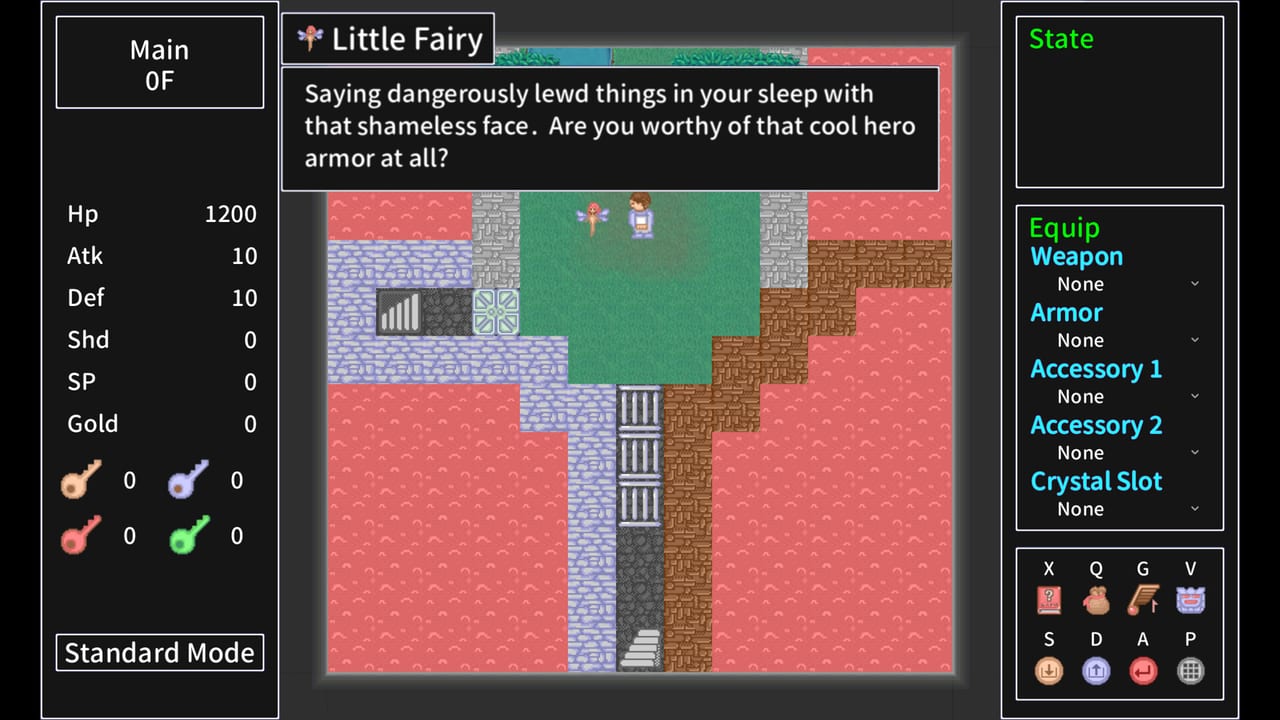
Magic Tower is a Chinese puzzle-RPG tradition. You walk a grid, pick up keys, and bump into monsters that fight automatically. Tower Realm packages several of those towers behind one Steam launcher. The collection’s pitch is blunt: maps, stats, and enemy layouts are fixed, so every decision is transparent. If a fight feels random, you missed a number, not a dice roll.
This page is the genre lesson. Pair it with Getting started for the launcher, Items for key colors, and Combat and routing for the math. The combat calculator is the tool you keep open while you learn.
The loop
You enter a floor. You see walls, doors, items, stairs, NPCs, and monsters. Doors eat keys. Items raise HP, ATK, or DEF, or they are special tools. Stairs move you between floors. Monsters block tiles until you beat them. Because combat is auto turn-based, your only combat input is the decision to step on the tile.
That decision is expensive. A fight you cannot finish is a wipe. A fight you can finish for 40 HP might still be a bad fight if a later shop would have used that HP more efficiently. Magic Tower skill is not clicking faster. It is refusing fights that do not buy a better route.
The handbook is the game
Classic Magic Tower shows monster HP, ATK, and DEF before you commit. Tower Realm is built on that idea. Open the handbook, pick a monster, and ask three questions:
- Is my ATK higher than its DEF? If not, you deal zero and the fight is illegal.
- How many rounds until it dies?
- How much HP do I lose if I strike first?
If you cannot answer those without guessing, do not walk onto the tile. Type the numbers into the calculator. Then compare the HP loss to potions still on the floor and to the next shop price. Combat and routing walks through that comparison with examples.
Keys are the map
Yellow, blue, and red keys open matching doors. You will find more yellow doors than yellow keys on most classic floors. That shortage is the puzzle. Opening every door is how beginners strand themselves. Count remaining keys against remaining doors before you touch a lock that only hides a gem you do not need yet.
Special keys and tools — including the collection’s Green Key — are not the same as the three colors. Green Key is a difficulty drop with extra supplies. Colored keys are the dungeon grammar. Do not mix those ideas.
Shops, gems, potions
Shops sell stats for gold. Gems usually raise ATK or DEF. Potions restore HP. The correct pickup is the one that unlocks the next required fight for the least future cost. A DEF gem that makes a mid-floor enemy deal zero can be worth more than an ATK gem that only shortens a fight you already survive. The items guide ranks that thinking without pretending every tower uses identical shop tables.
There is no grinding loop. You cannot walk in circles to farm EXP because the interesting towers do not work that way. If you are under-leveled, you took a wrong route or spent a key too early. Reload the floor, not your character build.
How a session should feel
A good session is slow. You look at a floor, mark the forced fights, mark the optional rooms, and only then move. Destined Melody’s early sword and shield exist to teach that patience. Later towers in the Towers Hub add story systems or rhythm rules, but they still sit on the same grid logic.
When you wipe, write down the fight that killed you. Recalculate it. If the handbook said you would die, the mistake was walking in. If the handbook said you would live, you misread first-strike or a special enemy rule. Either way, the map is still there. Fixed layouts are a kindness.
After you can play
Once Destined Melody’s first dozen floors feel readable, you are ready for hardcore clears or a second tower. Custom Mode waits until after a standard finish. The review explains who this loop is for: people who like thinking more than grinding. If that is not you, the Green Key exists, but it will not turn Tower Realm into an action RPG.
Frequently Asked Questions
Quick answers to the most common Tower Realm questions.
How does combat work in Tower Realm?
Fights are automatic and turn-based. Damage per round is ATK minus the defender's DEF. If ATK is not higher than DEF, you deal nothing. Use the handbook and the combat calculator before you step on a monster.
Can I grind levels?
Not in the way action RPGs mean. Maps and enemies are fixed. Progress comes from route order, keys, and shops, not from walking laps.
What should I read after this page?
Items for key colors, Combat and routing for math, then Destined Melody. Keep the calculator open.